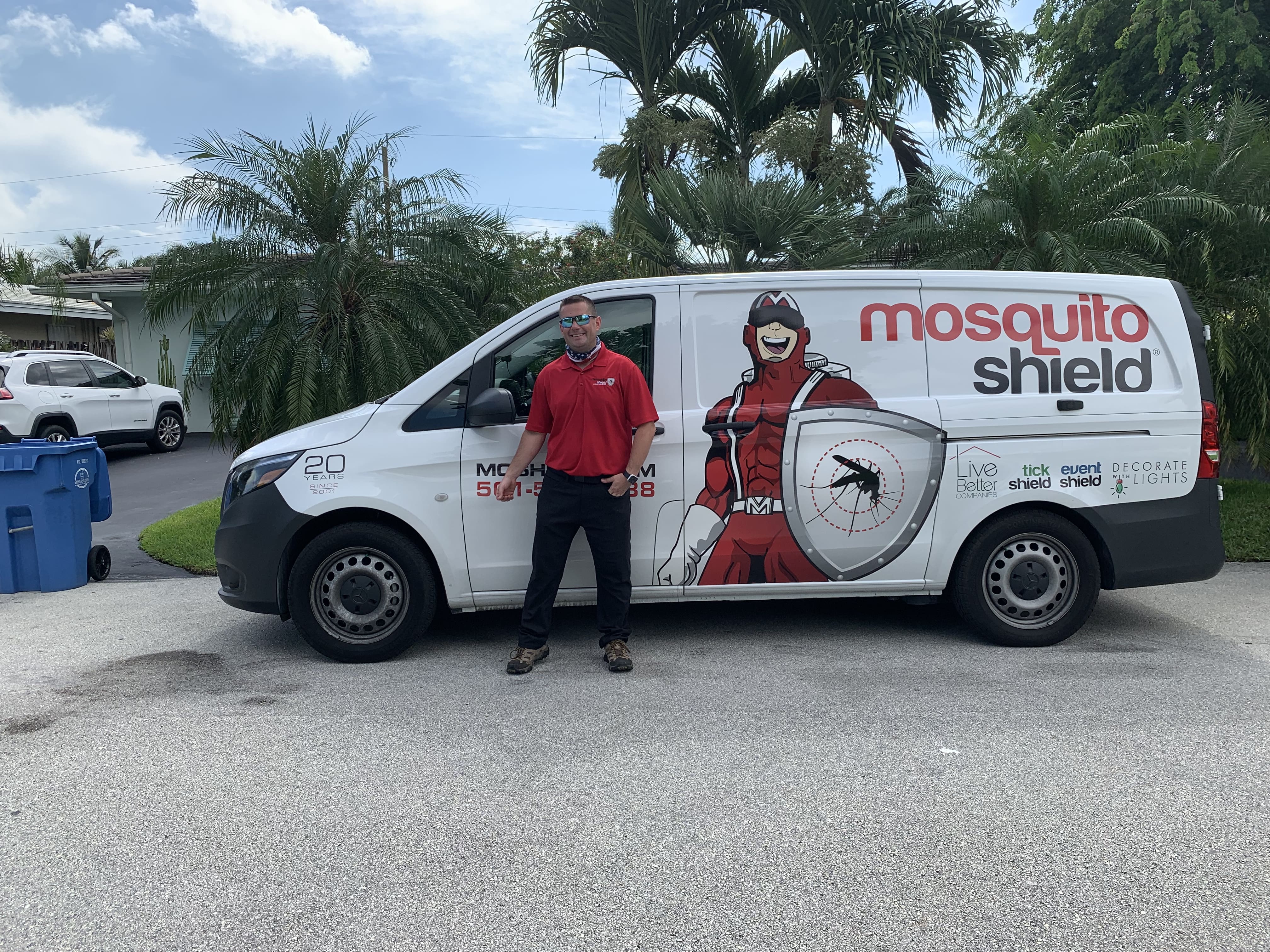
Eric Vincent
Owner & Licensed Pest Control Operator
Eric holds a degree in Pest Control Technology from the University of Florida and carries all five Florida pest control license categories: General Household Pest, Rodent, Lawn & Ornamental, Wood Destroying Organisms, and Public Health (License JB313837). He personally developed Mosquito Shield's proprietary Mosquito Protection Blend and has been treating South Florida properties for over a decade. When he is not in the field, he is behind every piece of content on this site.
UF Pest Control TechnologyLicense JB313837General Household PestRodentLawn & OrnamentalWood Destroying OrganismsPublic Health
Every hardware store and garden center in South Florida sells citronella candles, torches, and wristbands from March through October. They're cheap, they smell pleasant, and people keep buying them — which suggests either they work, or the bar for a Florida patio night has been set very low. Let's look at what actually happens when you put any of these methods head to head with professional barrier spray.
The Full Comparison
Citronella Candles
Minimal effect outdoors Cost$10–40 per set Protection area3–5 foot radius at best, in still air. Wind or air movement dissipates concentration instantly.
How it works
Citronella oil is a proven repellent compound — the problem is candles don't deliver it at outdoor-effective concentrations. A 2015 Journal of Insect Science study found citronella candles showed no significant reduction in bites vs. unscented control candles in outdoor conditions.
Best for
Ambience. If you enjoy the smell, light them. Don't rely on them for protection.
Limitations
No effect on mosquitoes already in your yard. Zero impact on breeding populations. Requires constant replacement. Useless in any wind.
Citronella Torches (Tiki Torches)
Marginally better than candles Cost$30–100 for setup Protection areaSlightly larger effective radius than candles due to higher flame output. Still minimal in South Florida conditions.
How it works
Same active compound as candles but delivered at higher volume. Studies show some reduction in bites close to the torch, but protection falls off sharply with distance and is eliminated by any breeze.
Best for
Decorative perimeter lighting with slight incidental repellent effect.
Limitations
Fire hazard near landscaping. Fuel cost adds up. No sustained protection once fuel runs out.
Consumer Mosquito Sprays (yard sprays from hardware stores)
Short-term; inconsistent coverage Cost$15–50 per application Protection areaCan knock down adult mosquitoes in treated areas for 24–72 hours if applied correctly. Highly dependent on coverage quality.
How it works
Typically permethrin or pyrethrin-based. Kills on contact and provides short residual. The issue is application — homeowners miss harborage areas, spray too lightly, and don't follow up on schedule.
Best for
Short-term relief before an outdoor event. Better than nothing.
Limitations
No systematic coverage. No professional assessment of breeding sites or mosquito pressure. No RainShield technology, so first rain event significantly reduces effectiveness. No IGR to disrupt lifecycle.
Bug Zappers
Counterproductive Cost$30–200 Protection areaStudies consistently show bug zappers kill large numbers of insects but very few are biting mosquitoes or gnats — the insects attracted to UV light.
How it works
UV light attracts insects; electrified grid kills on contact. Mosquitoes locate hosts by CO₂, heat, and moisture — not UV light. Research from the American Mosquito Control Association found <0.13% of insects killed by zappers were biting insects.
Best for
Moths and other UV-attracted insects.
Limitations
Kills beneficial insects (moths, beetles, aquatic insects) in large numbers. No meaningful impact on biting mosquito populations.
Mosquito Wristbands and Patches
Essentially ineffective Cost$5–20 Protection areaStudies show protection limited to the immediate vicinity of the wristband, if any. One 2017 Consumer Reports test found only 2 of 5 tested products provided meaningful protection, and none matched DEET.
How it works
Typically citronella or geraniol-impregnated material. Same delivery problem as candles — concentration drops off too quickly in open air.
Best for
Travelers looking for a chemical-free personal option who understand the limitations.
Limitations
Protection even for the wrist itself is inconsistent in studies. No practical impact on mosquitoes in the surrounding area.
Professional Barrier Spray (Mosquito Shield)
80%+ reduction by treatment 3–4 CostMonthly service fee; varies by property size Protection areaFull property. Treats all harborage areas — fence lines, shrubs, ground cover, dense vegetation. Mosquitoes that enter the yard contact treated surfaces and die.
How it works
Our MPB formula uses five plant-based active ingredients plus a small control product. Each ingredient serves a specific function: repellency, contact kill, lifecycle disruption. RainShield technology bonds the product to surfaces so it persists through rain. IGR added starting at treatment 2 prevents larvae from maturing.
Best for
Homeowners who want sustained, season-long mosquito reduction on their property — not just temporary knockdown.
Limitations
Requires professional application weekly or biweekly. Doesn't eliminate all mosquitoes (reduction, not elimination). Adjacent properties and natural areas still contribute immigration.
The One DIY Method That Actually Matters
Source elimination — removing standing water from your property — is the only DIY method that meaningfully reduces local mosquito populations. It doesn't intercept mosquitoes from neighboring properties or natural areas, but it removes the breeding sites that turn your yard into a production facility.
Everything else on the DIY list (candles, torches, zappers, wristbands) is either providing temporary personal comfort or not working at all. That's fine if you understand the tradeoff. It becomes a problem when homeowners spend money on these products and assume their mosquito problem is managed when it isn't.
What actually works together
- Remove standing water from your property (eliminates local breeding)
- Professional barrier spray weekly or biweekly (kills adults, disrupts lifecycle, protects property perimeter)
- EPA-registered personal repellent (DEET, picaridin) for prolonged outdoor activity at dusk/dawn
- Fans on the patio for calm evenings when biting pressure is high
Common Questions
Do citronella candles actually repel mosquitoes?+
Citronella oil does have documented mosquito-repellent properties. The problem is delivery method. A candle diffuses the compound into a very small area and the concentration dissipates rapidly. A 2015 study in the Journal of Insect Science found citronella candles provided no statistically significant reduction in Aedes albopictus bites compared to control candles with no active ingredient. In a closed room, maybe. On a South Florida patio, practically zero.
What's the most effective DIY mosquito control?+
Eliminating standing water is the only DIY method with meaningful impact on local mosquito populations. It removes breeding sites before adults emerge. Beyond that, EPA-registered personal repellents (DEET, picaridin, IR3535) are effective for personal protection while outdoors. No commercial DIY yard spray or consumer device comes close to professional barrier spray for sustained property-wide reduction.
How does professional barrier spray compare to store-bought mosquito spray?+
Consumer mosquito sprays from hardware stores typically use pyrethrins or permethrin at lower concentrations. You apply them yourself, which means uneven coverage and no professional assessment of where mosquitoes actually rest and breed. Professional barrier spray uses higher-concentration formulas, covers the full property systematically, and is reapplied on a schedule that matches mosquito lifecycle. The results aren't comparable.
Are mosquito-repelling plants effective?+
Citronella grass, lavender, marigolds, and basil are often promoted as mosquito repellents. None deliver meaningful protection in outdoor settings. The repellent compounds exist in the plant tissues but don't volatilize at concentrations high enough to affect mosquitoes in open air. They're fine for landscaping, but don't factor them into your mosquito management plan.
What about mosquito traps like Dynatrap or Mosquito Magnet?+
CO₂-based traps can reduce mosquito populations over time in contained areas — there's legitimate research supporting some products. The limitation for South Florida is scale: traps work best in isolated areas with limited mosquito immigration. On properties adjacent to canals, retention ponds, or heavy vegetation, the immigration rate overwhelms what traps can handle. They work better as supplemental tools than primary control methods.