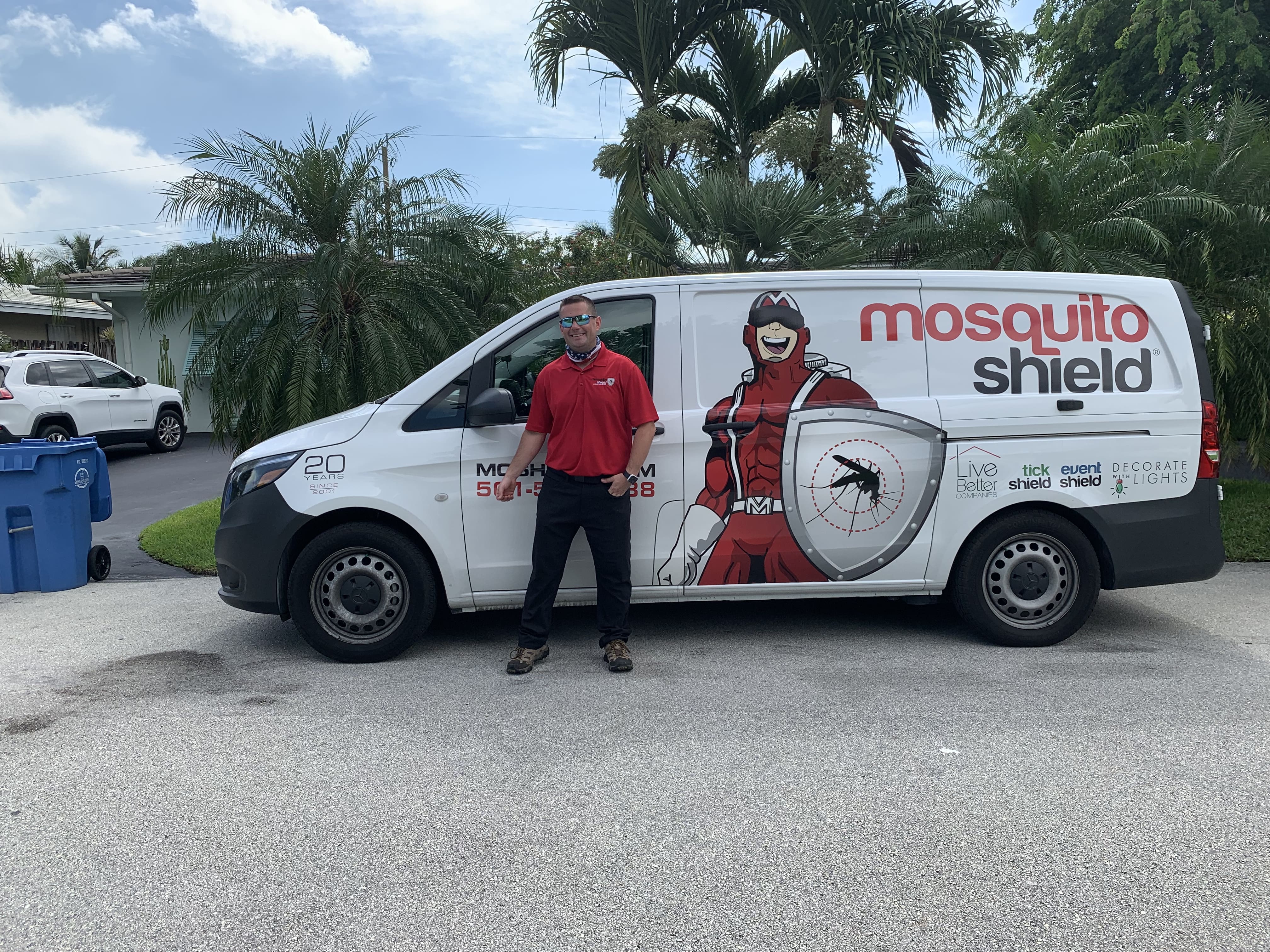
Eric holds a degree in Pest Control Technology from the University of Florida and carries all five Florida pest control license categories: General Household Pest, Rodent, Lawn & Ornamental, Wood Destroying Organisms, and Public Health (License JB313837). He personally developed Mosquito Shield's proprietary Mosquito Protection Blend and has been treating South Florida properties for over a decade. When he is not in the field, he is behind every piece of content on this site.
If you live in an HOA community in Broward or Palm Beach County — and most Boca Raton and Fort Lauderdale residents do — mosquito control is a shared challenge. I treat homeowners in master-planned communities throughout the area, and the pattern I see repeatedly is this: individual treatment helps, but the untreated common areas, shared lakes, and retention ponds undermine results for everyone in the neighborhood.
Why HOA Communities Struggle With Mosquito Control
HOA communities have structural mosquito challenges that standard residential properties do not. The features that make them attractive — lakes, ponds, lush common area landscaping — are also continuous mosquito breeding sources:
- HOA retention ponds and lakes — actively breed mosquitoes even when maintained; grass carp and aeration help water quality but not mosquito production
- Common area landscaping — dense shrubs, mulched beds, and shade trees provide ideal daytime resting habitat for adult mosquitoes
- Irrigation of common areas — HOA irrigation runs year-round, keeping breeding sites moist through dry season
- Uneven individual homeowner coverage — some homes treated, many not; gaps in coverage let populations persist and spread
- County spraying limitation — Broward and Palm Beach County mosquito control programs target public roads and parks, not private HOA property
HOA Community Types With the Worst Mosquito Problems
Golf course irrigation runs year-round. Fairway and rough perimeter areas create large breeding zones adjacent to private lots.
HOA lakes are the most consistent breeding sources. Even well-maintained lakes produce significant mosquito populations from shallow vegetated edges.
Canal banks breed year-round. County-maintained canals fall in a treatment gap between county spray programs and HOA property.
Populations originate in Everglades habitat and migrate east. Even well-treated properties see pressure from offsite sources.
Large common areas with mature trees and dense vegetation create extensive resting habitat. More area to treat means more cost but also more potential sources.
Options for HOA Communities
Option 1: Individual Homeowner Programs
The most common starting point. Even without community-wide coverage, barrier spray on your own property significantly reduces mosquito activity in your private outdoor spaces. You get the protection for your yard even if the HOA has not addressed common areas yet. Many homeowners in the same community sign up individually after seeing results from their neighbors.
Option 2: Coordinated Multi-Home Programs
When multiple homeowners in the same neighborhood coordinate, results are dramatically better. We schedule treatment routes so that nearby homes are treated on the same day, creating a broader connected barrier. Neighbors who want to coordinate can contact us together — we can often work out scheduling and route efficiencies for adjacent properties.
Option 3: HOA Board Contracts for Common Areas
We work directly with HOA boards to treat common areas, retention pond edges, perimeter landscaping, and community amenity zones. This addresses the shared breeding sources that individual homeowner programs cannot reach. We provide written proposals with specific treatment zones, frequency, and pricing that HOA boards can present to their communities.
We provide a free property walk-through and written proposal for common area coverage. Email info@MosquitoShieldBFLL.com or call 561-443-3333. We can work with your landscape or facilities vendor on scheduling coordination.
Option 4: MistAway Systems for Amenity Areas
For high-traffic community amenity zones — pool decks, clubhouses, picnic pavilions, playgrounds — MistAway automated misting systems provide consistent on-demand protection. These run on a schedule at dawn and dusk and can be triggered remotely before community events. Particularly effective for communities that host regular HOA events and activities.
What to Look For in an HOA Mosquito Control Vendor
- Licensed pest control operator — not a landscaping company upselling spray services; verify their FL license
- Treatment frequency of 10–17 days — monthly service cannot keep up with South Florida's mosquito cycle
- Rain-resistant formula — products that wash off in the first afternoon storm provide no lasting value in Florida
- Written proposal with specific treatment zones — a serious vendor identifies breeding sources before quoting
- Insurance and bonding — required for working on HOA-managed property
Frequently Asked Questions
HOA Board? Let's Talk.
We provide free proposals for HOA common area coverage. Individual homeowners are always welcome too. No contracts. 5.0 stars · 55 Google reviews. Serving 28+ South Florida communities.