
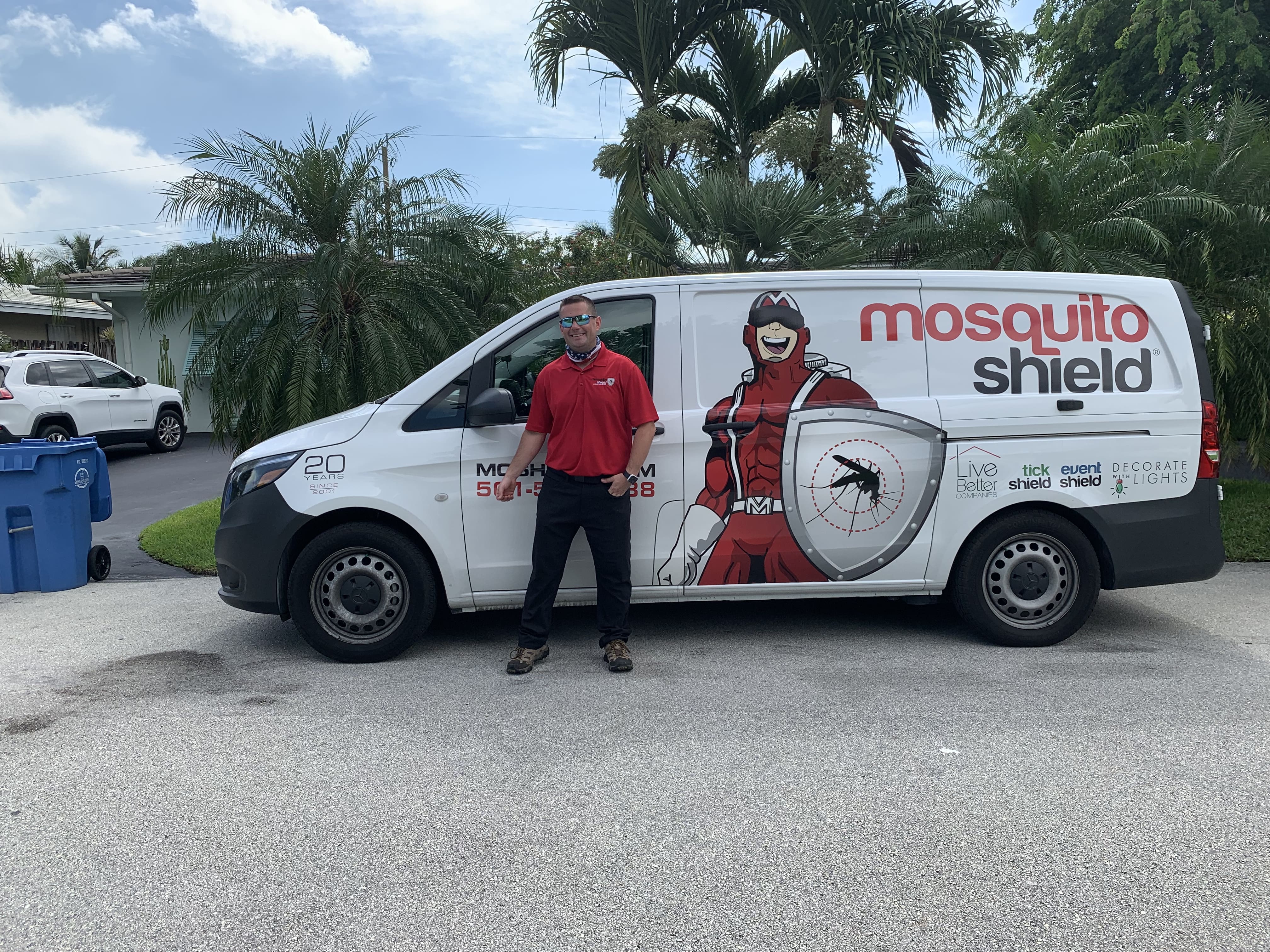
Eric holds a degree in Pest Control Technology from the University of Florida and carries all five Florida pest control license categories: General Household Pest, Rodent, Lawn & Ornamental, Wood Destroying Organisms, and Public Health (License JB313837). He personally developed Mosquito Shield's proprietary Mosquito Protection Blend and has been treating South Florida properties for over a decade. When he is not in the field, he is behind every piece of content on this site.
Boca Raton has more than 40 miles of navigable waterways. It's one of the city's defining features — and a perpetual mosquito challenge for the thousands of homeowners who live along those canals. Canal-front properties face a different kind of mosquito problem than inland homes, and standard advice doesn't fully apply to them.
Why Canals Create Worse Mosquito Conditions
A canal isn't just a body of water — it's a constantly replenished mosquito habitat. Every rain event raises water levels, which saturates the organic-rich soil along the banks. That damp, nutrient-dense soil is prime breeding ground for Culex quinquefasciatus, the Southern House Mosquito.
Canal banks also support vegetation — cattails, arrowhead plants, water hyacinth — that provides resting and hiding spots for adult mosquitoes during the day. Your yard borders this habitat directly.
Inland homeowners can theoretically eliminate all standing water on their property and see a meaningful reduction in local breeding. Canal-front homeowners can't do that — the breeding source on their back property line is permanent. That changes the calculus entirely.
The Species That Matters Most on Canal Properties
Culex quinquefasciatus (Southern House Mosquito) is the dominant biter on canal-front properties in Boca Raton. It breeds in stagnant or slow-moving water with organic content — exactly what you find in residential canals. It bites from dusk through the night and is the primary vector of West Nile virus in Florida.
You'll notice the pattern: you go inside after dinner, and by 8pm the back patio is unusable. That's Culex. They emerge from the canal bank at dusk and peak activity is in the first few hours after dark.
What the County Does — and What It Doesn't Cover
Palm Beach County Mosquito Control District treats public canals and drainage channels. They apply Bti larvicide (a bacteria that kills mosquito larvae specifically) to the water and occasionally do aerial or truck-mounted adulticide spraying of public areas during high-pressure periods.
What they don't treat: your yard, your seawall edge, the vegetation on your property, or the immediate bank of the canal where it touches your property line. That's private property, and private-property mosquito control is on the homeowner.
County treatment of the canal itself helps, but adult mosquitoes readily migrate from untreated areas. Residential barrier spray on your property intercepts them before they reach your outdoor living areas.
How We Treat Canal-Front Properties Differently
When we treat a canal-front home, we pay particular attention to:
Seawall edge and canal-facing vegetation
The last 10–15 feet of your property facing the canal is the hot zone. We treat fence lines, seawall edges, and any vegetation near the water's edge — this is where resting adult mosquitoes concentrate during the day.
Water-adjacent landscaping
Tropical plantings, palms, bromeliads, and ground cover along the waterside of your property all provide daytime harborage for Culex. We treat these thoroughly on every visit.
Dock structures and underdecking
The shaded, humid space under docks and decking facing the canal is a prime resting spot. We treat these areas where safely accessible.
Secondary water features
Canal-front properties often have fountains, koi ponds, or landscape water features in addition to the canal. We assess these and advise on management strategies (pumps, mosquito dunks, or drainage adjustments).
What Canal-Front Homeowners Can Do Between Treatments
- Reduce resting sites: Keep vegetation along the canal side trimmed. Dense, overgrown shrubs and ground cover along the water's edge give adult mosquitoes daytime shelter within feet of your yard.
- Eliminate secondary breeding sites: The canal is permanent, but additional standing water on your property compounds the problem. Empty plant saucers, check gutters, and keep the pool properly chlorinated.
- Use fans on the patio: No-see-ums and mosquitoes are both weak fliers. A ceiling fan or box fan on your patio pointed outward reduces biting activity on calm evenings when mosquitoes are worst.
- Time outdoor activity: Mosquito pressure peaks at dusk. If you want to use the back patio in the evening, earlier is better — the hour before sunset is more tolerable than the hour after.
Neighborhoods in Boca Raton with the Most Canal Frontage
Several Boca Raton communities have extensive canal networks where we see the heaviest mosquito pressure:
If you're in one of these communities and haven't found a solution that works, you're not imagining it — the canal makes standard approaches insufficient.
Common Questions
Do I need mosquito control if I live on a canal in Boca Raton?+
Almost certainly yes — and you'll need it year-round. Canal-front properties have a persistent mosquito source that never goes away. The county treats public waterways but not your yard or the canal bank immediately adjacent to your property. Residential barrier spray fills that gap by intercepting mosquitoes before they reach your outdoor living areas.
Does the county spray the canals in Boca Raton?+
Palm Beach County Mosquito Control does treat public canals and drainage systems, typically with Bacillus thuringiensis israelensis (Bti) larvicide and occasional aerial or ground adulticide spraying. However, this covers the water body itself — not the vegetation on your property, your seawall edge, or your yard. Private property treatment is the homeowner's responsibility.
Why are there so many more mosquitoes after it rains?+
Rain raises water levels in canals, which saturates the organic-rich soil along the banks — the preferred breeding habitat for Culex quinquefasciatus (Southern House Mosquito). Additionally, any temporary pools or standing water in your yard fill, creating secondary breeding sites. New adults emerge roughly 7–10 days after a major rain event, which is why you'll notice a surge about a week after a big storm.
What mosquito species are most common on Boca Raton canals?+
Two primary species: Culex quinquefasciatus (Southern House Mosquito) thrives in organically rich canal water and the damp soil along banks — this is the species that transmits West Nile virus. Aedes aegypti (Yellow Fever Mosquito) breeds in smaller standing water sources on your property rather than the canal itself but is abundant near water features. At dawn and dusk, you may also see salt marsh mosquitoes (Aedes taeniorhynchus) in areas with more natural vegetation near the Intracoastal.
How often do you spray properties on canals?+
We spray weekly or biweekly — the same schedule as any residential property, but canal-front customers often see the greatest contrast in before/after conditions. Some canal-front customers in particularly high-pressure areas elect to start service earlier in the year and continue through December. We adjust based on your specific conditions.