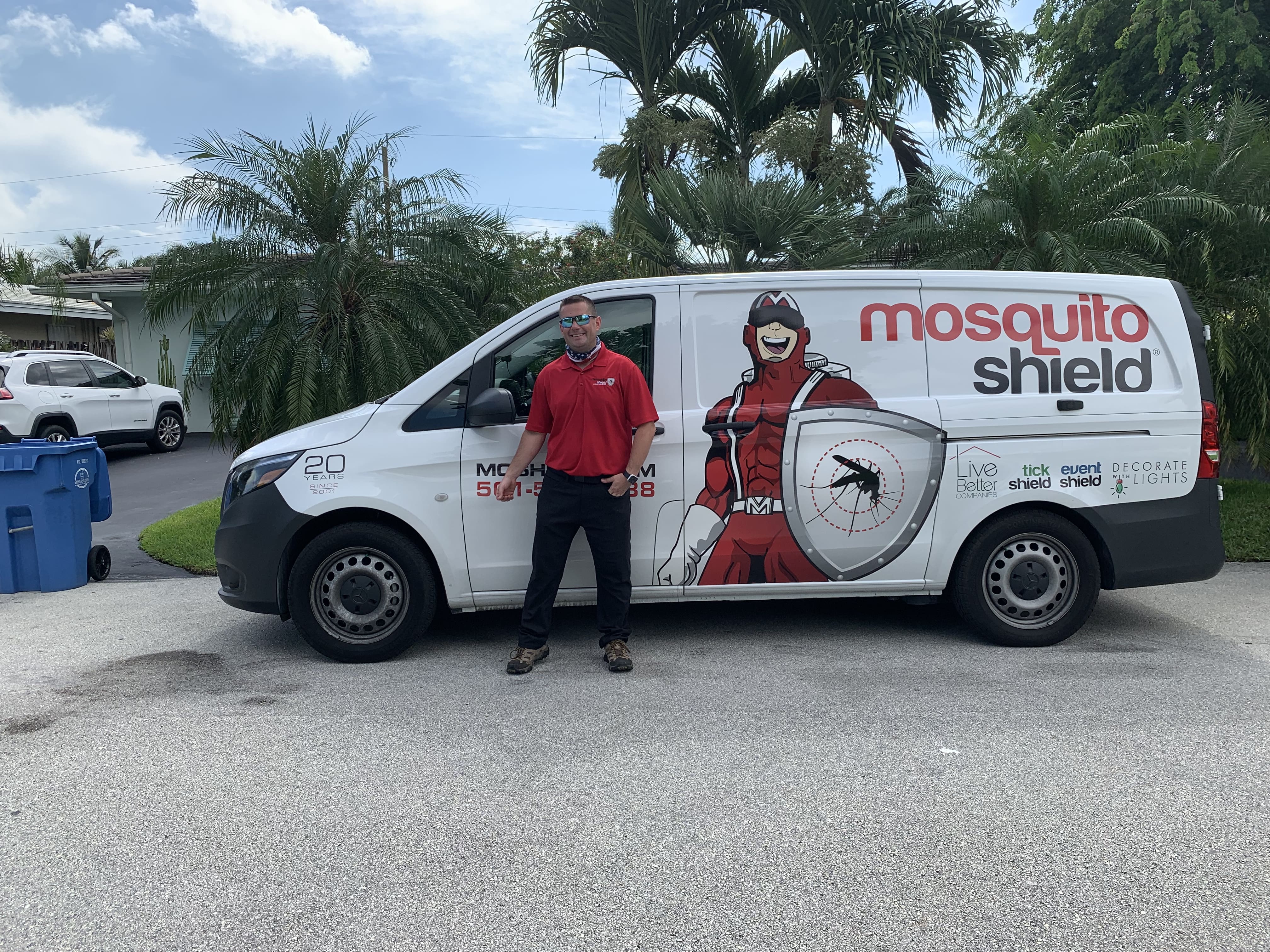
Eric holds a degree in Pest Control Technology from the University of Florida and carries all five Florida pest control license categories: General Household Pest, Rodent, Lawn & Ornamental, Wood Destroying Organisms, and Public Health (License JB313837). He personally developed Mosquito Shield's proprietary Mosquito Protection Blend and has been treating South Florida properties for over a decade. When he is not in the field, he is behind every piece of content on this site.
Fort Lauderdale is sometimes called the Venice of America — 165 miles of navigable waterways threading through the city. It is a beautiful place to live. It is also one of the most challenging mosquito environments in South Florida. As a licensed pest control operator (Public Health license JB313837) who treats properties throughout Fort Lauderdale, here is what I have learned treating canal-front, Intracoastal, and urban properties in this city.
The Neighborhoods With the Worst Mosquito Pressure
Not all Fort Lauderdale properties face the same pressure. Based on our treatment history:
Properties with direct canal frontage face constant breeding from adjacent water. Aedes aegypti and Culex quinquefasciatus populations here are among the highest in our territory. We typically recommend the 10-day interval for these addresses from May through October.
The New River and its tributaries create continuous breeding habitat. Properties backing to river-adjacent greenspace also face pressure from the vegetation buffers along the river, which provide excellent adult resting habitat.
Dense urban neighborhoods with older infrastructure. Catch basins, clogged storm drains, and mature landscaping create a mix of breeding and resting sites. Mid-canopy tree coverage provides daytime resting habitat that extends mosquito active windows.
Primarily residential areas with mix of canal-adjacent and inland properties. Properties directly on finger canals fall into the high category; inland blocks see more typical pressure manageable on the standard 17-day cycle.
Further from the primary canal network. Pressure spikes after significant rain events when low-lying areas flood temporarily. Standard 17-day cycle typically maintains effective suppression for these properties.
Why Monthly Treatments Don't Cut It Here
The mosquito hatch cycle in South Florida runs 8 to 14 days from egg to biting adult in summer heat. A monthly treatment schedule means there is a 2-week window every month where the treatment has worn off but the next visit hasn't happened yet. For inland properties without significant water pressure, monthly may hold. For Fort Lauderdale canal properties, monthly leaves a gap that the canal breeding cycle fills immediately.
- Days 1–14: Treatment active
- Days 14–30: Gap period
- Canal breeds continuously into gap
- Mosquitoes rebound before next visit
- Never reaches sustained suppression
- Matches the mosquito hatch cycle
- No gap period for population rebound
- Each visit builds on previous suppression
- 80%+ reduction by treatment 3–4
- Rain shield holds through Florida rain
What We Treat in Fort Lauderdale
Our barrier spray targets the areas where mosquitoes rest during the heat of the day, not just the areas where they bite. In Fort Lauderdale properties, that typically includes:
- Fence lines and hedges — primary daytime resting sites on most properties
- Understory of trees and palms — shaded, humid microhabitats mosquitoes prefer
- Dense shrubs and ground cover — particularly bougainvillea, ixora, and jasmine common in FLL landscaping
- Canal-edge vegetation — treated with care for aquatic buffer zones
- Outdoor living areas (patios, pergolas, pool screen borders) — treated last to minimize exposure before re-entry
We apply our Mosquito Protection Blend with a rain-resistant polymer layer that keeps the product on foliage through Fort Lauderdale's near-daily summer showers. Dry time is 15 minutes.
No-See-Ums: The Other Fort Lauderdale Waterfront Problem
If you live near the Intracoastal, New River, or any of Fort Lauderdale's coastal canals, you likely deal with both mosquitoes and biting midges (no-see-ums). No-see-ums are hardest to escape at dusk and dawn and are nearly impossible to keep out of screened enclosures because of their size. Our MPB blend significantly reduces no-see-um pressure as part of standard mosquito service — many waterfront clients say the no-see-um improvement is more noticeable than the mosquito reduction in the first few treatments.
Fort Lauderdale Zip Codes We Serve
Covers: Intracoastal / Las Olas, Downtown / Flagler Village, Victoria Park, Colee Hammock, Tarpon River, Sailboat Bend, Coral Ridge, Oakland Park border, and surrounding neighborhoods. Call to confirm your address.
Frequently Asked Questions
Fort Lauderdale Mosquito Control
We treat canal-front, Intracoastal, and inland Fort Lauderdale properties on the 10–17 day schedule that actually matches how fast mosquitoes breed here. No contracts. 7-day money-back guarantee. 5.0 stars · 55 Google reviews.