Local 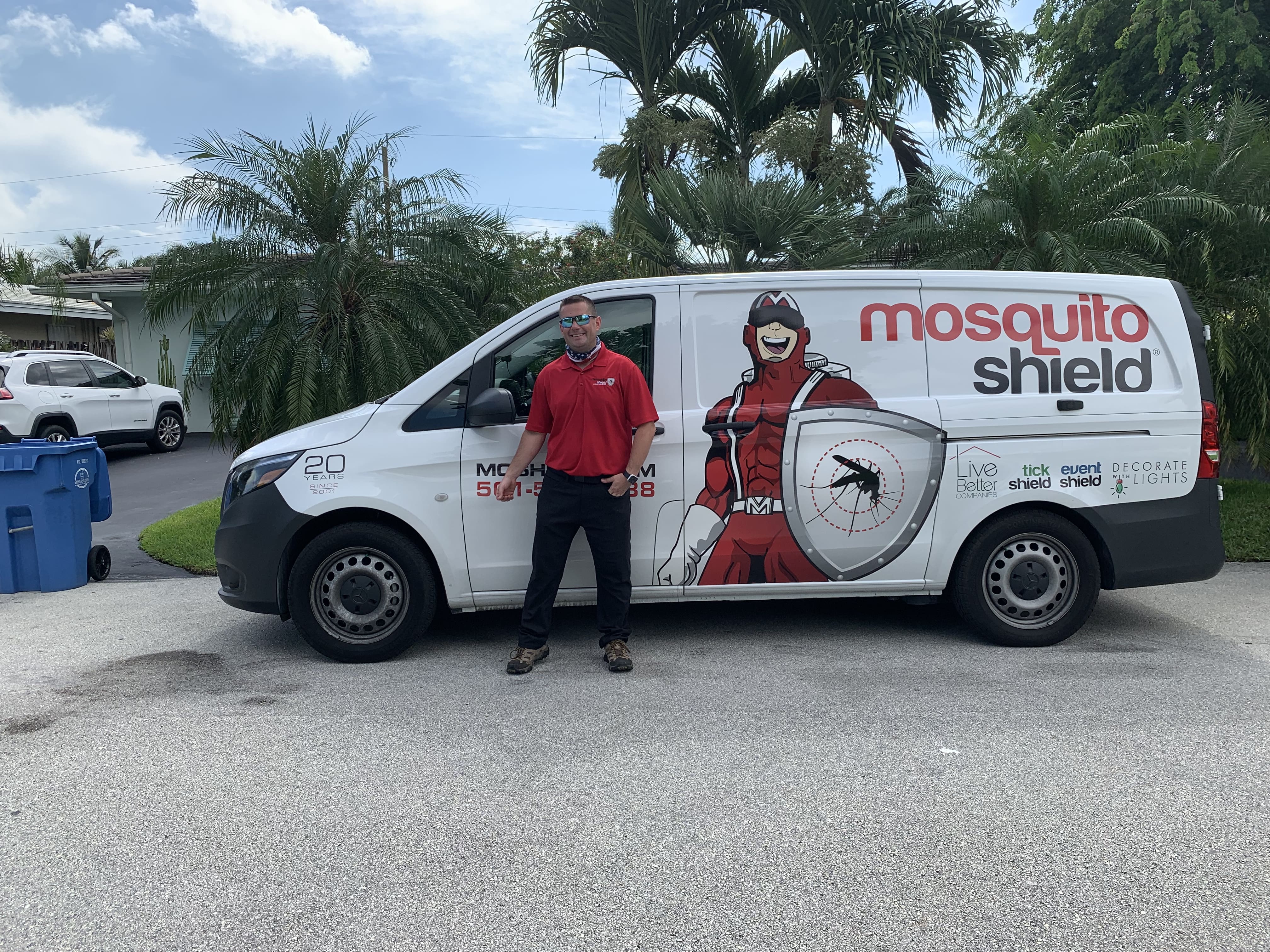
Eric Vincent
Owner & Licensed Pest Control Operator
Eric holds a degree in Pest Control Technology from the University of Florida and carries all five Florida pest control license categories: General Household Pest, Rodent, Lawn & Ornamental, Wood Destroying Organisms, and Public Health (License JB313837). He personally developed Mosquito Shield's proprietary Mosquito Protection Blend and has been treating South Florida properties for over a decade. When he is not in the field, he is behind every piece of content on this site.
UF Pest Control TechnologyLicense JB313837General Household PestRodentLawn & OrnamentalWood Destroying OrganismsPublic Health
Parkland is one of the most beautiful communities in Broward County — and one of the most challenging mosquito environments in our territory. The city's western border touches the Everglades, its large lots support mature tree canopy, and its preserve buffers provide ideal resting habitat for every mosquito that breeds in the wetlands to the west. I have treated Parkland properties for years, and the Everglades-adjacent reality requires a different approach than what works in more urban parts of our service area.
The Parkland reality: The Everglades is essentially a continuous, untreatable mosquito breeding source immediately west of the city. Every property in Parkland is downwind of that pressure. The goal of treatment is not elimination — it is continuous suppression that keeps your property usable despite the adjacent breeding pressure.
Pressure by Location Within Parkland
Western edge (33076) — Sawgrass Expressway corridor Extreme
Properties backing directly to preserve or fronting the Sawgrass Expressway corridor face the highest pressure in our territory. Mosquitoes move east from the Everglades on prevailing winds. These properties typically need our 10-day interval from May through October. Some extreme cases benefit from In2Care station supplementation in addition to barrier spray.
Properties adjacent to Parkland preserve buffers and lakes Very High
Parkland's community design incorporates extensive lake and preserve buffer systems. Properties backing to these areas face both Everglades origin mosquitoes and local breeding from the community water features. Large wooded lots add daytime resting habitat that sustains populations between treatments.
Interior Parkland neighborhoods (Heron Bay, Parkland Golf) High
Even interior Parkland properties face higher pressure than typical South Florida neighborhoods because of the overall city context. The mature landscape and community lake systems provide both breeding and resting habitat. Most properties do well on a 14-day cycle here.
Eastern Parkland (Coral Springs border) Moderate-High
The eastern portions of Parkland, near the Coral Springs border, are further from the Everglades influence and have slightly lower overall pressure. Standard 17-day cycle is usually adequate here, though properties with lake frontage or heavy wooded lots may benefit from shorter intervals.
Parkland's Tick Problem: What Pet Owners Need to Know
Parkland has the highest tick pressure of any community we regularly service. The reason is straightforward: abundant wildlife, large wooded lots, and Everglades proximity create ideal conditions for tick host animals (deer, raccoons, opossums, rabbits) to move freely through residential areas. Ticks hitchhike on these animals and establish in your yard.
The American dog tick is most common, and it carries Rocky Mountain spotted fever. Lone star ticks, which cause Alpha-gal syndrome (red meat allergy), are increasingly common in Parkland as well.
For Parkland dog owners: We strongly recommend adding flea and tick treatment to your mosquito program. Most Parkland dogs that spend time outdoors are encountering ticks regularly. Our tick treatment targets the ground-level leaf litter and vegetation where ticks ambush — which is different from the mid-height barrier spray for mosquitoes. Both can often be done on the same visit.
What We Do Differently for Parkland Properties
- Shorter treatment cycles — 10 to 14 days for Everglades-adjacent properties instead of standard 17
- Deeper vegetation coverage — Parkland's large lots and mature landscaping require longer treatment times and more product to achieve full coverage of the resting habitat
- In2Care station consideration — for extreme pressure properties, we evaluate In2Care mosquito traps for breeding source management in areas where standing water cannot be drained
- Tick treatment bundling — most Parkland clients benefit from combined mosquito and tick service
- Preserve edge treatment — we treat aggressively into the buffer zone between your lawn and wooded preserve areas, which is the primary point of mosquito ingress
Parkland Communities We Serve
Heron BayParkland Golf and Country ClubWatercrestCypress HeadPine Tree EstatesParkland IslesParkland BayCovered Bridge EstatesMeridian IslesParkland Preserve
Zip codes: 33067, 33076. Call to confirm your address if you are near the city limits.
Frequently Asked Questions
Why are mosquitoes so bad in Parkland, FL?
Parkland sits directly adjacent to the Everglades, one of the largest freshwater wetland systems in North America. The Everglades provides essentially unlimited mosquito breeding habitat just west of the city. Parkland's development character — large lots, mature tree canopy, wooded preserve buffers — also provides abundant adult resting habitat. Properties on the western edge of Parkland (33076 zip code, backing to Sawgrass Expressway or Loxahatchee) face the most sustained pressure. Properties near Parkland's many community lakes and retention ponds have a secondary breeding pressure source on top of the Everglades origin.
What zip codes in Parkland do you serve?
We serve all of Parkland, including zip codes 33067 and 33076. This covers the full Parkland city limits including the Heron Bay, Parkland Golf and Country Club, Watercrest, Cypress Head, and Pine Tree Estates communities, as well as properties bordering the Everglades on the western edge of the city.
Does Parkland have a tick problem?
Yes. Parkland has one of the highest tick pressures of any community in our territory. The Everglades proximity and abundant wildlife (deer, raccoons, opossums) provide the primary host population that sustains tick colonies. Properties adjacent to preserve areas, wooded lots, and those with pets that roam outdoors face significant tick exposure. American dog ticks and lone star ticks are most common. We recommend flea and tick treatment as an add-on for most Parkland properties, particularly those with dogs.
How often do Parkland properties need mosquito treatment?
Most Parkland properties, especially those on larger lots with wooded buffers or backing to preserve areas, perform best on our 10 to 14 day treatment interval rather than the standard 17 days. The Everglades breeding pressure continuously repopulates treated properties faster than standard residential areas. We assess each property individually — a Parkland property in a dense community cluster closer to the eastern city limits may hold fine on 17 days, while a two-acre wooded lot bordering a preserve may need the shorter cycle.
Do you treat the wooded areas and preserve buffers of Parkland properties?
We treat the full developed footprint of your property, including vegetation, tree understory, fence lines, and ground cover. We also treat into the buffer zone at the edge of wooded preserve areas, which is where mosquitoes move from during the evening. We do not treat inside protected preserve areas themselves. For properties with large wooded lots, we may recommend a more comprehensive coverage pattern that addresses the full depth of the resting habitat on your property.
Parkland Mosquito and Tick Control
We treat Parkland properties on the shorter cycles that Everglades-adjacent pressure requires. No contracts. 7-day money-back guarantee. 5.0 stars · 55 Google reviews. Call to discuss your specific property.