Prevention 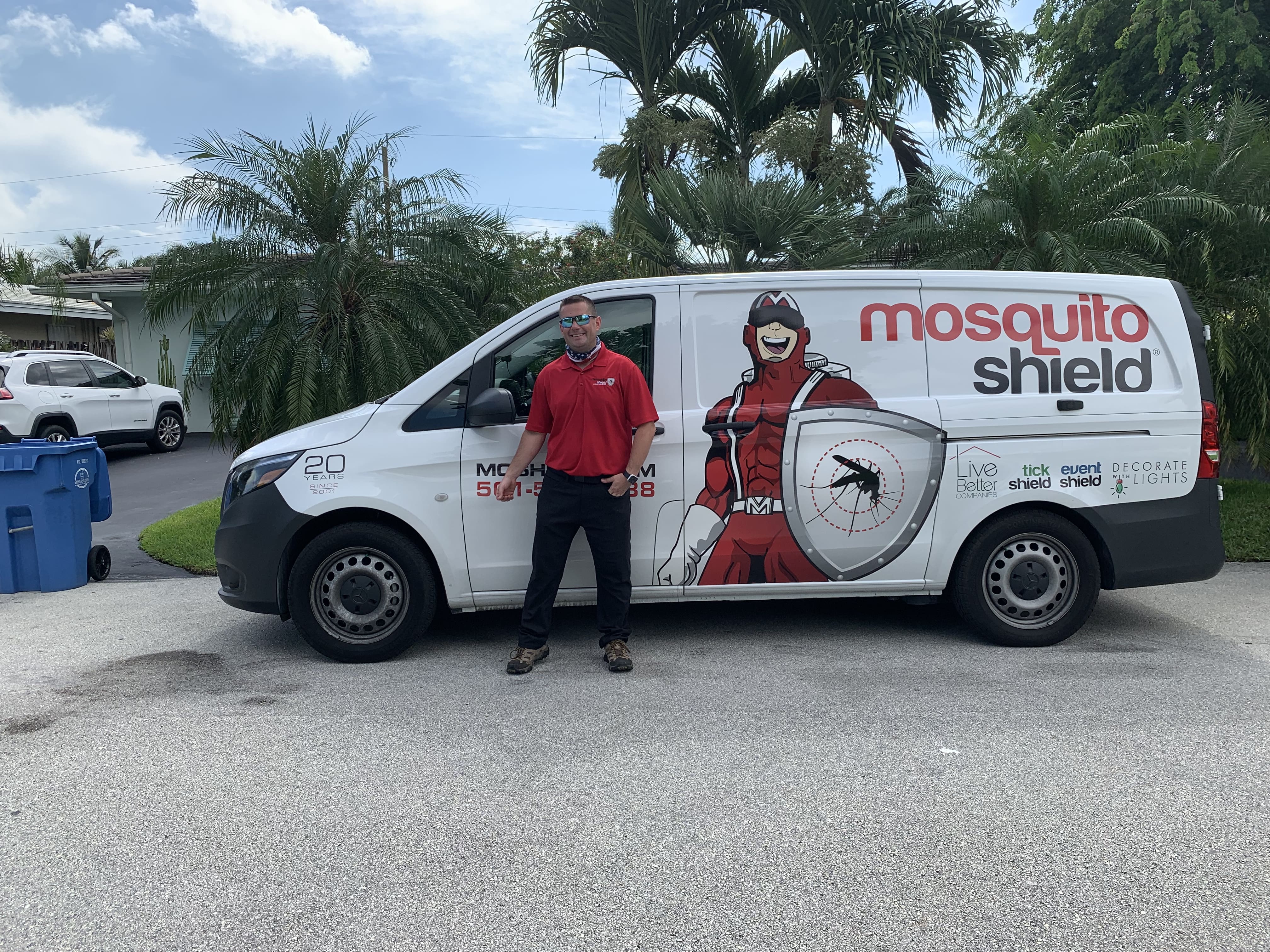
Eric Vincent
Owner & Licensed Pest Control Operator
Eric holds a degree in Pest Control Technology from the University of Florida and carries all five Florida pest control license categories: General Household Pest, Rodent, Lawn & Ornamental, Wood Destroying Organisms, and Public Health (License JB313837). He personally developed Mosquito Shield's proprietary Mosquito Protection Blend and has been treating South Florida properties for over a decade. When he is not in the field, he is behind every piece of content on this site.
UF Pest Control TechnologyLicense JB313837General Household PestRodentLawn & OrnamentalWood Destroying OrganismsPublic Health
South Florida homes are built around outdoor living — pools, covered lanais, outdoor kitchens, screened enclosures. The whole point is to be outside. Mosquitoes are the primary reason that outdoor living shuts down at dusk from June through October, which is most of South Florida's best weather. As a licensed pest control operator who treats hundreds of pool and lanai properties throughout Broward and Palm Beach County, here is what actually works.
The Outdoor Living Mosquito Problem: Where They Come From
Most homeowners focus on the wrong thing — they try to treat the space where they sit instead of the habitat where mosquitoes spend most of their time. Mosquitoes rest during the day in vegetation: under shrub leaves, in the understory of trees, along hedge lines, in ground cover. They emerge at dusk from that vegetation and move toward their targets. The key insight:
Treat the resting habitat, not the seating area. If you eliminate the resting population in the vegetation surrounding your pool and lanai, there are far fewer mosquitoes that ever reach the outdoor living space. Barrier spray works by targeting the hedge, the shrub border, the fence line — not the pool deck itself.
Water Sources Near Your Pool That Are Actually Breeding Mosquitoes
Plant saucers
Empty every 3 to 4 days. The most consistently missed breeding site on Florida properties.
Pool screen frame channels
Check after rain. Water traps in the aluminum frame track and breeds Aedes mosquitoes.
Pool equipment covers
Any cover that collects rainwater is a breeding container. Drill drainage holes or replace with covers that shed water.
Outdoor furniture with hollow legs
Cap hollow chair and table legs — these collect water and breed mosquitoes inside the tubing.
Condensate drip from pool heater or AC equipment
Ensure condensate drain lines discharge to a drain, not onto the deck or landscape.
Decorative pots without drainage
Drill drainage holes in all decorative pots, or add a layer of sand on top of the soil.
Pool toys and floats stored poolside
Store face-down or in a dry area. Water pools inside and between inflatable toys.
Overflow from pool deck drains
Keep deck drains clear so water doesn't back up and pool around them.
Screen Enclosures: The Truth About Mosquito Reduction
Screen enclosures (pool cages, Florida rooms, lanai enclosures) reduce mosquito exposure significantly but do not eliminate it. Mosquitoes enter through:
- Screen tears — even a small tear is a viable entry point
- Door gaps — screen doors rarely seal completely at the bottom
- Gaps where screen frame meets the concrete deck
- Following people through the door during normal use
- Equipment penetrations where pipes or electrical conduit enter
The solution is not to perfect the screen seal (though repairing tears helps) — it is to reduce the mosquito population outside the screen dramatically enough that the number entering through normal gaps is negligible. That is what barrier spray achieves.
The Difference Our Clients Describe
When we ask clients what prompted them to call, the most common answer is some version of: "We can't use our pool after 6pm." Or: "We spent $80,000 on an outdoor kitchen that we never use." The pattern we see after treatment:
Treatment 1
Noticeable immediate reduction. Some rebound within 3–4 days as eggs already in environment hatch.
Treatment 2 (10–17 days later)
Population significantly suppressed. Most clients report being able to use outdoor space comfortably in the evenings.
Treatment 3–4
80%+ reduction in mosquito activity. Outdoor living is functional again. No-see-um reduction also noticeable by this point.
Ongoing
Sustained suppression through the season. Activity spikes after major rain events but recovers within the treatment cycle.
Frequently Asked Questions
Does pool water breed mosquitoes?
Properly maintained, chlorinated pool water does not breed mosquitoes — the chemical environment is hostile to larvae. The breeding happens in the water around the pool: in plant saucers, in pool equipment covers that collect rainwater, in the gutters above the pool screen, in condensation drip trays under pool equipment, and in any ornamental water feature near the pool that is not chemically treated. Pool enclosure screen tears can trap water in the frame channels as well. The pool itself is not the problem — the surrounding environment is.
Why do I still get mosquitoes in my screened lanai?
Screen enclosures slow mosquitoes down but do not eliminate them. Mosquitoes enter through screen tears, gaps at door frames, gaps at the foundation where the screen track meets the deck, and openings where equipment penetrates the screen. They also follow humans through doors during entry and exit. Once inside the screened space, they are trapped with you in an enclosed environment, which can actually make the experience worse than being outside. Professional barrier spray of the vegetation surrounding the screen enclosure reduces the mosquito population trying to enter, which reduces the number that succeed.
What can I do to reduce mosquitoes at my pool without chemicals?
Source reduction first: empty plant saucers weekly, fix any dripping faucets or hose connections near the pool, ensure pool equipment covers drain properly, keep gutters above pool enclosures clean, check screen frame channels for trapped water, and fix any screen tears promptly. Circulation matters: mosquitoes cannot lay eggs in moving water, so keeping pool circulation running during evening hours (when Culex mosquitoes lay eggs) reduces the appeal of any water near the pool area. Remove dense vegetation immediately adjacent to the pool enclosure — this is the primary adult mosquito resting site.
How is the pool area specifically treated during barrier spray?
We treat the vegetation surrounding the pool enclosure — the shrubs, hedges, and ground cover that provide adult mosquito resting habitat. We do not spray directly on the pool surface, pool deck, or inside the screened enclosure. The treatment is applied to the outside of any screen enclosure, on the vegetation along fence lines adjacent to the pool area, and in the landscape buffer around outdoor living spaces. The goal is to eliminate the resting population before mosquitoes attempt to enter the screen. We apply last in the pool area so you can return in 15 minutes.
I have an outdoor kitchen — is the spray safe for food prep areas?
We do not spray directly on countertops, grill surfaces, or areas where food is prepared or eaten. Outdoor kitchens are common in our territory and we treat the surrounding vegetation while avoiding the food contact surfaces themselves. Once the product dries (15 minutes), cooking and outdoor dining can resume. If you have a covered outdoor kitchen, let us know during the service call and we will treat the perimeter landscaping while keeping the covered food prep area clear.
Take Back Your Pool and Outdoor Living Space
Most clients are back outside in the evenings within 2 treatments. No contracts. 7-day money-back guarantee. No re-entry risk once dry. No neonicotinoids. Serving 28+ South Florida communities.