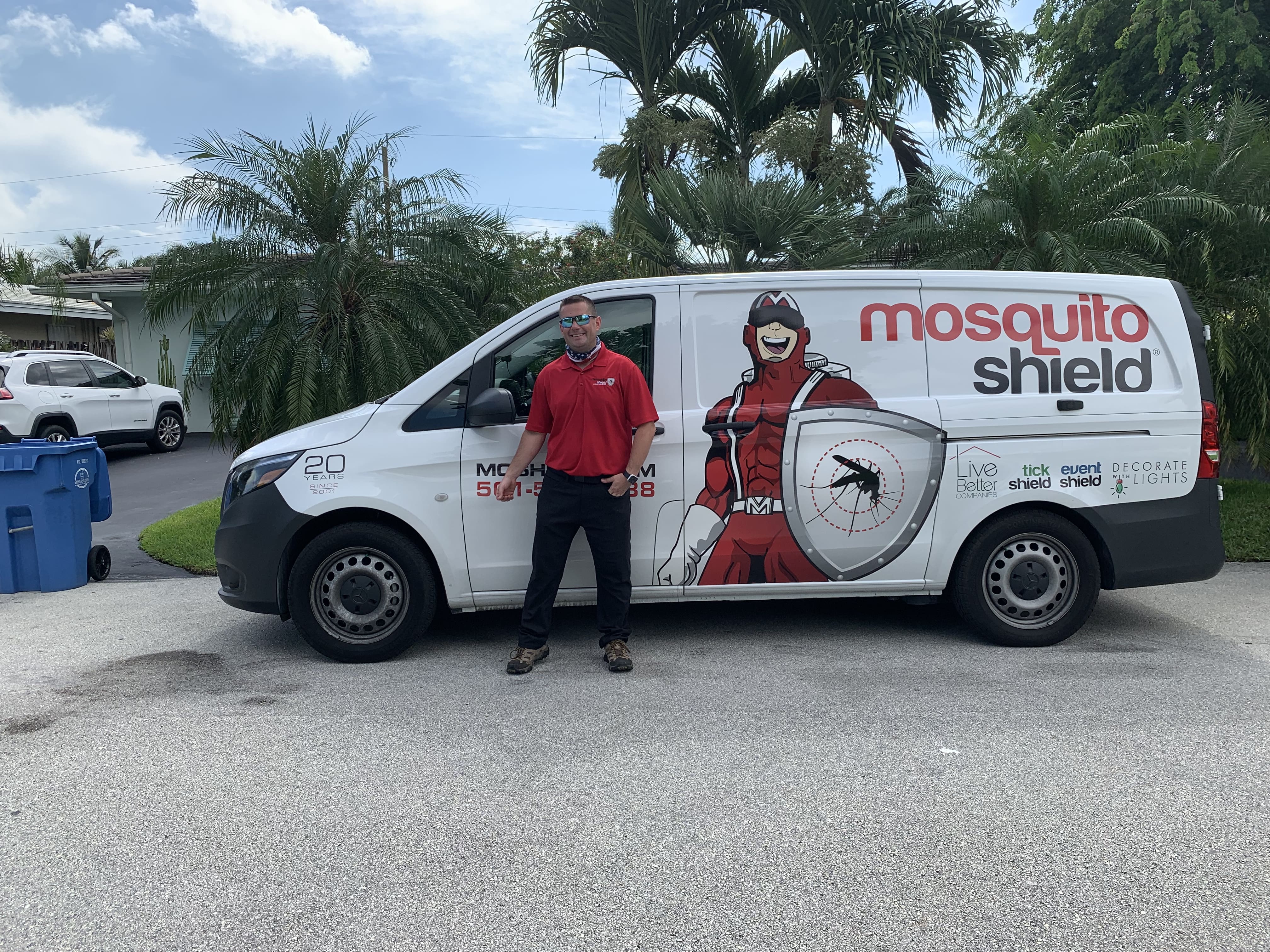
Eric holds a degree in Pest Control Technology from the University of Florida and carries all five Florida pest control license categories: General Household Pest, Rodent, Lawn & Ornamental, Wood Destroying Organisms, and Public Health (License JB313837). He personally developed Mosquito Shield's proprietary Mosquito Protection Blend and has been treating South Florida properties for over a decade. When he is not in the field, he is behind every piece of content on this site.
You step outside at dusk, feel something biting, and see nothing. Welcome to the no-see-um, South Florida's most infuriating pest. As a UF-trained pest control operator with a Public Health license, I deal with no-see-um complaints year-round across Boca Raton and Fort Lauderdale. Here is what actually helps — and what does not.
What Are No-See-Ums?
No-see-ums are biting midges from the family Ceratopogonidae. In Florida, the most common species attacking humans is Culicoides furens. They are approximately 1–3 millimeters long — about one-tenth the size of a mosquito — which is how they earned their name. Like mosquitoes, only female midges bite, requiring blood to develop eggs. They breed in wet, muddy shoreline environments: canal banks, mangrove edges, salt marshes, and freshwater wetlands.
No-See-Um Season in South Florida
Unlike mosquitoes, which follow a clear rainy-season cycle, no-see-ums are present and active in South Florida virtually year-round. That said, pressure does peak:
- Worst months: March through November — peak season aligns with warm temperatures and high rainfall
- Worst time of day: Dawn and dusk — they are crepuscular feeders, most aggressive in low-wind, low-light conditions
- Worst after rain — new breeding sites activate and adults surge in numbers
- Worst on calm evenings — no-see-ums are weak fliers; any breeze above 5–8 mph grounds them
Properties With the Worst No-See-Um Problems
Certain property types in Boca Raton and Fort Lauderdale consistently see worse no-see-um pressure:
Canal banks are ideal breeding habitat. Muddy organic shoreline stays wet year-round and supports large Culicoides populations.
Salt marsh and mangrove edges near the Intracoastal are among the highest-pressure no-see-um environments in South Florida.
Shallow, vegetated edges of HOA lakes and retention ponds provide breeding habitat within flight range of your yard.
Parkland, Southwest Ranches, Sunrise, and western Coral Springs border Everglades habitat where no-see-um populations originate and migrate eastward.
Heavy vegetation provides shelter and humidity that extends the active window for no-see-ums and makes conventional control harder.
What Actually Controls No-See-Ums
Professional Barrier Spray
Our mosquito barrier spray program significantly reduces no-see-um activity. No-see-ums are in the same insect order as mosquitoes (Diptera) and respond to the same botanical compounds in our Mosquito Protection Blend. Citronella and geraniol in our formula are particularly effective at repelling biting midges. Customers on our program report notable no-see-um reductions as a secondary benefit of mosquito service — often within the first two to three treatments.
Physical Controls That Work
- No-see-um screens — 20x20 or 32x32 mesh replaces standard 16x16 window screens
- Patio fans — no-see-ums cannot fly in wind above 5–8 mph; ceiling and floor fans on patios eliminate them
- Timing outdoor activities — avoid being outside at dawn and dusk during peak season
- Personal repellents — DEET and picaridin-based repellents are effective against biting midges; oil of lemon eucalyptus (OLE) also works
What Does Not Work
- Bug zappers — attract but do not significantly reduce no-see-um populations
- Standard mosquito traps — designed for mosquito flight patterns, not effective against the smaller midge
- Barrier treatments targeting only the property line — no-see-ums migrate from offsite water sources; perimeter-only treatment misses resting sites in vegetation
- Treating only standing water — no-see-ums breed in muddy soil, not open water
Frequently Asked Questions
No-See-Ums and Mosquitoes: One Program Targets Both
Our barrier spray program significantly reduces both mosquitoes and no-see-ums. All-natural MPB formula, bee-safe, no contracts. 5.0 stars · 55 Google reviews. Serving Boca Raton, Fort Lauderdale, and 28+ South Florida communities.