Pest Guide 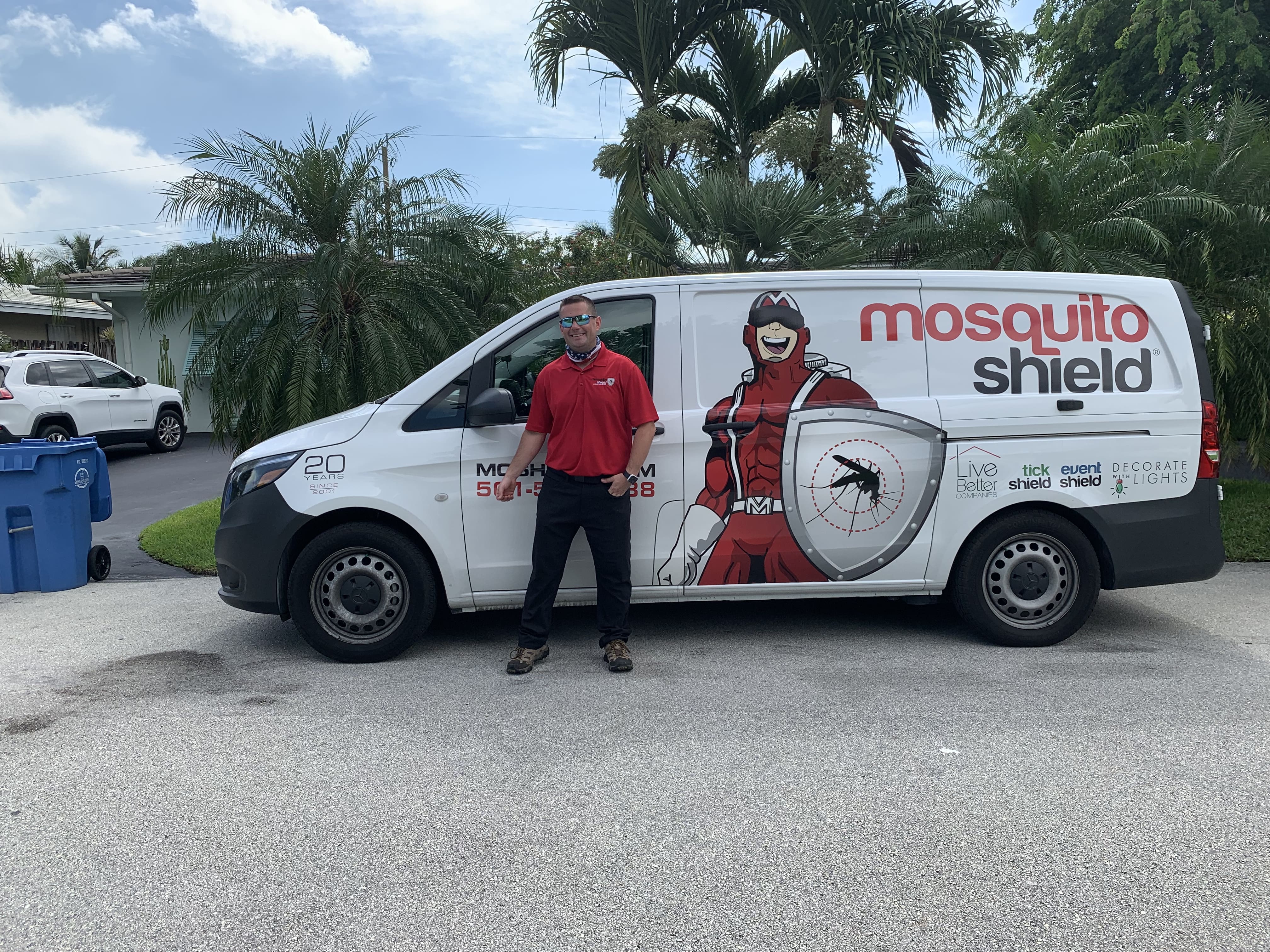
Eric Vincent
Owner & Licensed Pest Control Operator
Eric holds a degree in Pest Control Technology from the University of Florida and carries all five Florida pest control license categories: General Household Pest, Rodent, Lawn & Ornamental, Wood Destroying Organisms, and Public Health (License JB313837). He personally developed Mosquito Shield's proprietary Mosquito Protection Blend and has been treating South Florida properties for over a decade. When he is not in the field, he is behind every piece of content on this site.
UF Pest Control TechnologyLicense JB313837General Household PestRodentLawn & OrnamentalWood Destroying OrganismsPublic Health
If you live in South Florida long enough, you will eventually come face to face with a palmetto bug. They are large, fast, and startling. They fly in the summer heat. And in Broward and Palm Beach County, they are essentially a fact of life. As a licensed pest control operator (General Household Pest license JB313837), I treat palmetto bug problems throughout our territory. Here is what every South Florida homeowner needs to understand about them — and how to actually keep them out.
The key fact most homeowners don't know: Palmetto bugs (American cockroaches) are outdoor insects. A palmetto bug in your house is a visitor, not an infestation. The goal is to stop them from getting in — not to treat inside the house.
Palmetto Bug vs. German Cockroach: Why It Matters
This distinction matters enormously for treatment:
Palmetto Bug (American Cockroach)
- 1 to 1.5 inches long, reddish-brown
- Outdoor insect — enters from outside
- Lives in drains, mulch, leaf litter
- Seeks entry points into homes
- Does not infest inside
- Treated with perimeter spray
German Cockroach
- 0.5 inch, tan with two dark stripes
- Indoor pest — infests inside
- Hides in kitchen, bathrooms, walls
- Reproduces rapidly indoors
- Full infestation if untreated
- Requires gel bait + interior treatment
If you see one or two large roaches occasionally — usually at night in the kitchen, garage, or bathroom — those are almost certainly palmetto bugs entering from outside. If you see many small roaches in daylight, especially in the kitchen, that's a German cockroach situation requiring a different treatment approach. We handle both, but they are not the same problem.
Where Palmetto Bugs Live Outside Your Home
Understanding their outdoor habitat explains where treatment focus should be:
- Storm drains and sewer systems — the primary population reservoir in most neighborhoods
- Mulch beds — particularly cypress or wood mulch close to the foundation
- Leaf litter under shrubs and trees
- Under landscape timbers and decorative pavers
- Tree hollows and under tree bark — especially palms and oaks
- Cardboard boxes and clutter in garages — a very common indoor harborage
- Attic spaces — particularly in older homes
How Palmetto Bugs Enter Your Home
Closing these entry routes is part of long-term control:
Gaps under exterior doors
Install door sweeps on all exterior doors — this single change stops the most common entry route
Pipe penetrations under sinks
Caulk or foam-seal around all plumbing where pipes enter through walls and floors
HVAC line penetrations
Seal around refrigerant line sets and drain line penetrations on exterior walls
Attic vents
Ensure all attic vents have intact screening; replace damaged screens
Garage doors
Replace worn weather stripping on garage door bottom seal; garage is the primary entry point for many homes
Utility conduits and cable entries
Seal around electrical conduit, cable TV, and internet line entry points
Professional Treatment: What We Do
Our Pest Shield perimeter treatment for palmetto bugs targets the areas they travel through to reach your home:
- Exterior foundation perimeter (full band around the home)
- All exterior door thresholds and entry points
- Garage door perimeter and interior perimeter walls
- Eave overhangs where palmetto bugs rest
- Fence lines and outdoor wall surfaces
- Mulch beds adjacent to the foundation
We apply every 60 to 75 days to maintain a continuous protective barrier. This interval matches the residual life of the product under South Florida heat and UV exposure. Year-round service is necessary here because there's no winter population die-off.
After heavy rain: Storm events flush palmetto bugs out of drains and low-lying areas and drive them toward higher, drier ground — which includes your home. Post-storm is when most homeowners see a spike in palmetto bug activity inside. If this is your pattern, call us for a treatment immediately after a significant rain event and we'll prioritize your schedule.
What Not to Do
- Don't rely on indoor roach spray alone — it doesn't address the source
- Don't use foggers (bug bombs) — they scatter palmetto bugs deeper into the structure temporarily and don't address entry points
- Don't leave pet food out overnight — it's a significant attractant
- Don't pile firewood against the house — it's a major harborage
- Don't ignore the garage — it's the most common entry pathway and is frequently undertreated
Frequently Asked Questions
What is a palmetto bug?
Palmetto bug is the common South Florida name for the American cockroach (Periplaneta americana). They are the large, reddish-brown cockroaches (1 to 1.5 inches long) that most South Florida homeowners encounter. Unlike German cockroaches, which infest inside and are extremely difficult to eliminate once established, palmetto bugs are primarily outdoor insects. They live in storm drains, mulch beds, under leaf litter, in sewer systems, and around landscape debris. They enter homes seeking water, food, or shelter — they don't establish large indoor colonies the way German roaches do.
Are palmetto bugs the same as cockroaches?
Yes. Palmetto bug, American cockroach, and Florida woods roach are all names used in South Florida for large roaches. The American cockroach (Periplaneta americana) is the species most homeowners encounter. The Florida woods roach (Eurycotis floridana) is a related species — slower, stockier, and often found under bark and in mulch. The German cockroach (Blattella germanica) is a different species entirely: smaller, tan-colored, and a true indoor infesting pest that reproduces rapidly and is much harder to eliminate. When South Florida homeowners call about palmetto bugs, they almost always mean American cockroaches.
Why do I keep getting palmetto bugs in my house?
Palmetto bugs enter homes through foundation gaps, under exterior doors without adequate sweeps, around pipe penetrations (under sinks, around HVAC lines), through drains, through attic vents, and around utility conduits. South Florida's warm climate means they're active year-round with no winter interruption. Properties with heavy mulch close to the foundation, standing water, or large trees near the home provide ideal habitat. After heavy rain, palmetto bugs often move from flooded outdoor habitat (storm drains, mulch beds) into higher ground — which means your home during and after a storm.
Do palmetto bugs fly?
Yes, American cockroaches have fully developed wings and can fly, though they prefer to run. They fly more readily in hot weather and are attracted to light. In South Florida's summer heat (90+ degrees), flying palmetto bugs are more common — they're often seen flying toward porch lights at night. This is a normal behavior and not an indication of infestation severity.
How do I get rid of palmetto bugs?
The most effective approach combines perimeter pest treatment with structural exclusion. Perimeter treatment creates a toxic barrier around the foundation that palmetto bugs must cross to enter — and don't survive. Exclusion means sealing entry points: installing door sweeps on all exterior doors, caulking around pipe penetrations under sinks and around HVAC lines, sealing around utility conduits, and screening attic vents. Reducing outdoor habitat (pulling mulch 6 inches from the foundation, reducing excessive moisture near the home) addresses the breeding and resting environment that sustains them.
How often should I treat for palmetto bugs?
Perimeter pest treatment every 60 to 75 days provides effective year-round suppression for most South Florida properties. This interval reflects the residual life of the treatment product and the recolonization rate of American cockroaches. Year-round service is recommended because South Florida has no winter to reduce outdoor populations. Properties with significant pressure — large trees, storm drain adjacency, heavy mulch, or older homes with foundation gaps — may benefit from more frequent initial treatments to break the cycle.
Keep Palmetto Bugs Outside Where They Belong
Our Pest Shield perimeter treatment creates a barrier palmetto bugs, ants, spiders, and silverfish can't survive crossing. Every 60–75 days. Year-round protection. No contracts. 7-day money-back guarantee. Serving 28+ South Florida communities.