9 Standing Water Sources in Your Yard That Are Breeding Mosquitoes Right Now
March 1, 2026 · Mosquito Shield of Boca & Fort Lauderdale
Eric Vincent
Owner & Licensed Pest Control Operator
Eric holds a degree in Pest Control Technology from the University of Florida and carries all five Florida pest control license categories: General Household Pest, Rodent, Lawn & Ornamental, Wood Destroying Organisms, and Public Health (License JB313837). He personally developed Mosquito Shield's proprietary Mosquito Protection Blend and has been treating South Florida properties for over a decade. When he is not in the field, he is behind every piece of content on this site.
UF Pest Control TechnologyLicense JB313837General Household PestRodentLawn & OrnamentalWood Destroying OrganismsPublic Health
South Florida gets around 60 inches of rain per year, most of it concentrated between May and October. After every afternoon storm, water collects in dozens of places around a typical yard — and in the heat and humidity of summer, that water can produce a new generation of biting mosquitoes in as little as a week.
Walk your property with this list and you'll likely find several sources you haven't thought about.
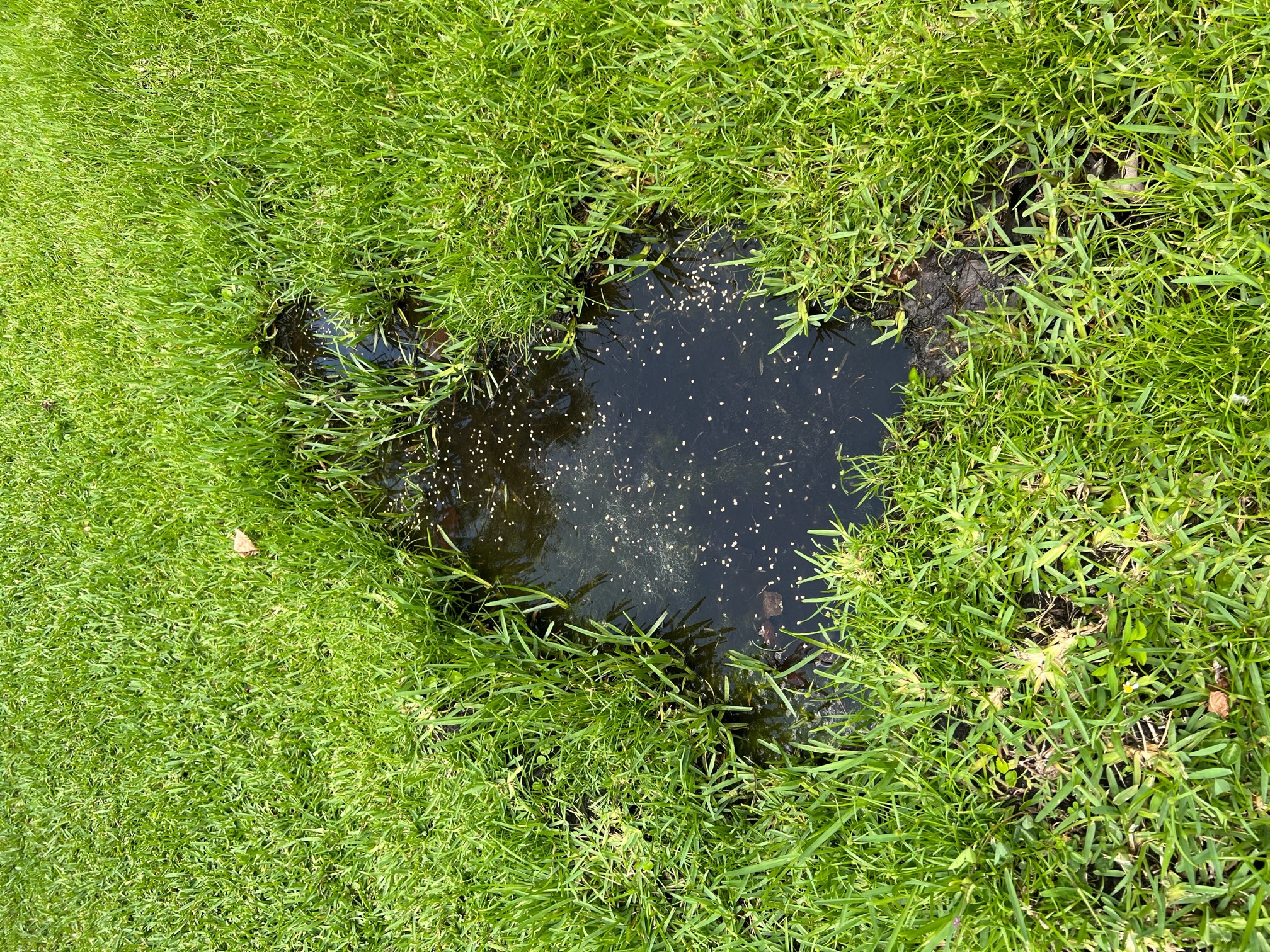
Even a small puddle in your lawn can produce hundreds of mosquitoes within a week.
1
🏚️
Clogged Gutters
The #1 source most homeowners miss. Gutters clogged with leaves and debris hold water for days after rain — right at roofline height where you can't easily see or feel it. One 20-foot section of clogged gutter can contain gallons of standing water and produce thousands of mosquitoes.
FIX
Clean gutters twice a year minimum — before and after rainy season. Consider gutter guards if your yard has heavy tree coverage.
2
🪴
Plant Saucers and Pot Trays
That little tray under your potted plant collects water with every rainfall. Many South Florida homes have dozens of these — on patios, walkways, balconies, and in gardens. They're ideal breeding habitat: small, shallow, sheltered from wind, and regularly refilled.
FIX
Empty saucers every 3–4 days, especially after rain. Alternatively, drill drainage holes in saucers you don't need, or switch to self-draining planters.
3
🏊
Tarps and Pool Covers
Any large plastic surface will sag and collect water. Pool covers, boat tarps, equipment covers, and stored furniture covers are all common culprits. A sagging tarp can hold dozens of gallons of stagnant water — more than enough to produce a significant local mosquito population.
FIX
Tighten tarps to prevent sagging, or punch small drainage holes at low points. After heavy rain, walk your property and push water off any pooled surfaces.
4
🐦
Bird Baths and Water Features
Standing, non-circulating water in bird baths becomes a breeding site within 7–10 days. Decorative ponds without pumps or fish are equally problematic. The shallow depth and frequent refilling from rain makes them attractive to egg-laying females.
FIX
Change bird bath water every 3–5 days. Add a pump or fountain to create water movement — mosquitoes won't lay eggs in moving water. Add mosquito dunks (Bti) to decorative ponds without fish.
5
🛝
Kids' Toys and Play Equipment
Plastic toys, dump trucks, buckets, and the cups and bowls of play kitchens all collect water. Even a toy bucket left upside down can pool water in the indentation at the bottom. Kids' play areas are often under-scrutinized for standing water.
FIX
Store toys indoors or under cover after use, or at minimum turn them upside down so water can't pool. Do a weekly sweep of the play area after rain.
6
🪣
Wheelbarrows and Garden Equipment
A wheelbarrow left in the yard after a rain event is a classic overlooked source. It holds a lot of water, gets refilled every storm, and sits at a height where female mosquitoes can easily find it. Same for watering cans, buckets, trash can lids, and old tires.
FIX
Store wheelbarrows and buckets upside down or in a shed. Drill drainage holes in any container that must stay outdoors. Recycle old tires — they're ideal breeding sites that are very hard to fully dry out.
7
❄️
AC Condensate Lines
Central air conditioning systems drain condensate water through a PVC line that typically exits outside your home. If this line drips onto concrete or into a small basin, it creates constant standing water. In Florida's heat, AC units run constantly — so this drip never stops.
FIX
Check where your AC condensate line drains. If it pools, redirect it to a sloped surface or into a French drain. Clean the line annually to prevent clogs that cause backflow.
8
🌿
Low Spots in Lawn and Landscaping
Areas of your lawn where water visibly pools after rain are prime breeding habitat. The same is true for low spots in mulched planting beds where water collects at the base of plants. In South Florida, where nearly every afternoon brings a storm, these spots refill constantly.
FIX
Address drainage issues by re-grading low areas or installing French drains. For mulched beds, rake mulch regularly to break up compaction and improve drainage. Consider drought-tolerant ground covers in persistently wet areas.
9
⛵
Neglected or Infrequently Used Boats
Boats stored in driveways or on lifts accumulate water in bilge areas, storage compartments, coolers, and canvas folds. A boat that sits unused for two weeks between outings can build a significant mosquito population in the water that's collected inside.
FIX
After each use, drain all standing water from the boat and its storage compartments. Cover securely with a well-fitted cover that sheds rain cleanly. Boats on trailers should be stored tilted slightly to drain.
A Note on Canals and Retention Ponds
If you live on or near a canal, retention pond, or other large water feature, you have a persistent breeding source you can't eliminate. This is one of the main reasons professional barrier spray matters so much for canal-front and water-adjacent properties — the breeding source is always there. The spray intercepts adult mosquitoes before they reach you, regardless of where they came from.
Broward and Palm Beach County mosquito control districts treat public canals and drainage systems, but they don't treat private property. Residential treatment fills that gap.
How Barrier Spray Fits In
Eliminating standing water reduces your local breeding population, which is meaningful and worth doing. But it doesn't eliminate mosquitoes from your yard entirely — they'll still fly in from a neighbor's property, nearby water features, or from natural habitat in your landscaping.
This is where professional barrier spray complements source reduction: even when you've done everything right on your property, the barrier spray kills incoming mosquitoes before they bite. Together, they're significantly more effective than either approach alone.
Common Questions
How little water does it take for mosquitoes to breed?+
Very little. Aedes aegypti, the Asian Tiger Mosquito common throughout Boca Raton and Fort Lauderdale, can breed in as little as one teaspoon of water. A single bottle cap, a leaf cupped with rainwater, or a saucer under a potted plant is enough. This is why eliminating all visible standing water matters so much in South Florida.
How quickly do mosquitoes breed in standing water?+
Rapidly. In South Florida's summer heat, mosquito eggs can hatch within 24–48 hours, and larvae can develop into biting adults in as little as 7–10 days. This lifecycle speed is why we spray weekly or biweekly — monthly service simply can't keep up with how fast South Florida mosquitoes reproduce.
Does the city spray for mosquitoes in my neighborhood?+
Broward and Palm Beach County mosquito control districts do spray public areas and roadside ditches. However, they don't treat private residential property, and their treatments don't eliminate the breeding sites in your yard. County spraying complements but doesn't replace residential property treatment.
What about my neighbor's yard?+
Mosquitoes travel 1–3 miles. Even if you've eliminated every breeding site on your property, mosquitoes from a neglected neighboring lot or nearby canal will still find their way in. This is why barrier spray on your vegetation is important — it intercepts mosquitoes before they bite, regardless of where they came from.
Do pool covers create mosquito breeding habitat?+
Yes, if water pools on top of the cover. A sagging, improperly fitted pool cover can collect significant amounts of standing water after rain. Make sure your cover drains properly, or remove pooled water after rain events. Pool water itself, when properly chlorinated and circulating, doesn't breed mosquitoes.
Fix the Sources. Then Spray the Barrier.
Source reduction + professional barrier spray is the most effective approach for South Florida properties. Call us for a free assessment.