
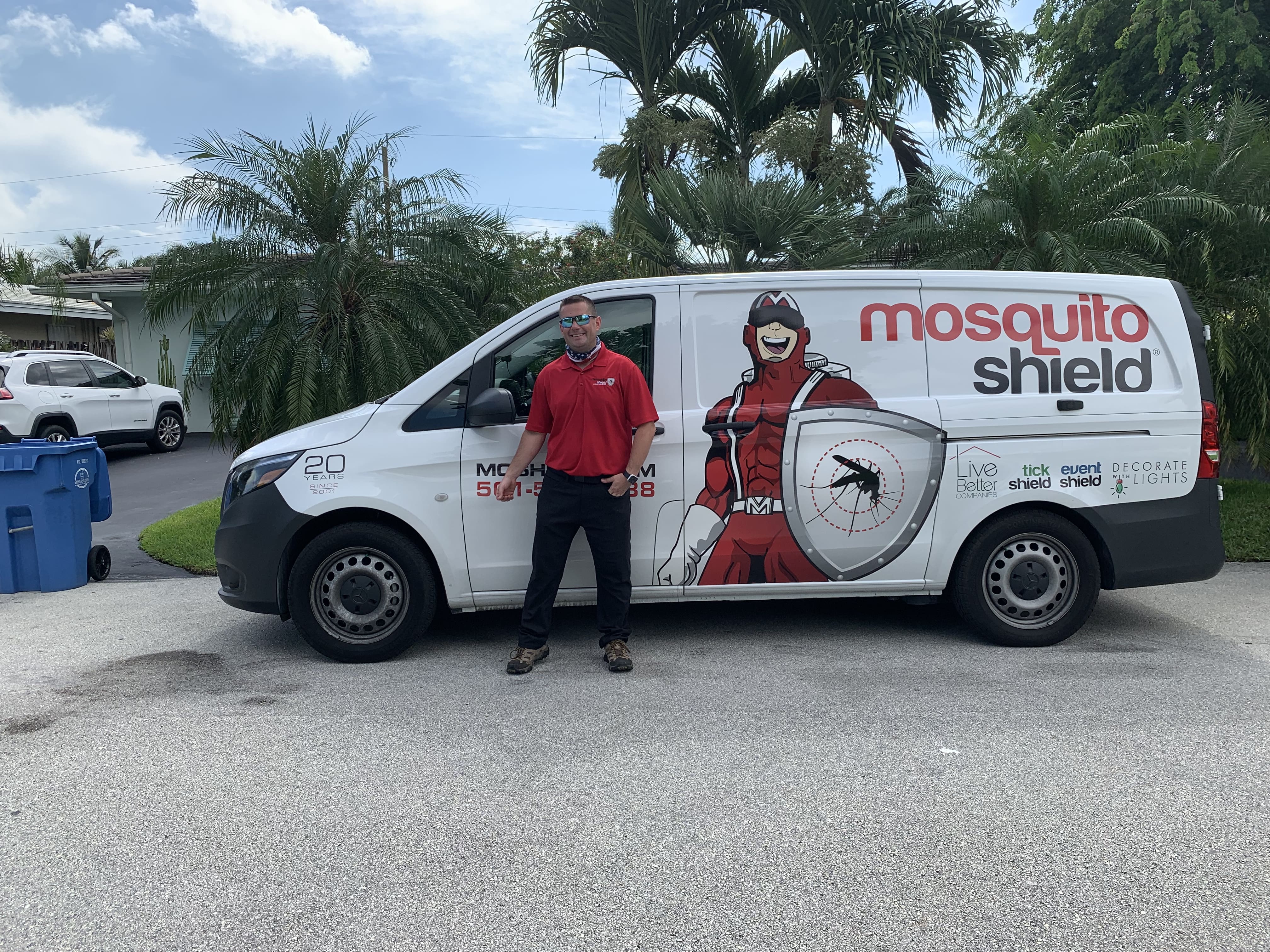
Eric holds a degree in Pest Control Technology from the University of Florida and carries all five Florida pest control license categories: General Household Pest, Rodent, Lawn & Ornamental, Wood Destroying Organisms, and Public Health (License JB313837). He personally developed Mosquito Shield's proprietary Mosquito Protection Blend and has been treating South Florida properties for over a decade. When he is not in the field, he is behind every piece of content on this site.

Most South Florida homeowners think of ticks as a northern problem — something you worry about hiking in the woods in New England, not walking your dog in Boca Raton. But Florida has multiple tick species active year-round, and as a licensed pest control operator with a General Household Pest and Lawn & Ornamental license, I treat tick-related calls throughout Broward and Palm Beach County year-round. Here is what every South Florida pet owner and parent needs to know.
Tick Species in South Florida
The most common tick found on pets and people in Broward and Palm Beach County. Adults are reddish-brown and visible to the naked eye. They bite humans and pets readily, particularly in grassy and brushy areas. Rocky Mountain spotted fever (RMSF), which this tick carries, can be serious and requires prompt antibiotic treatment. Active year-round in South Florida.
The carrier of Lyme disease. Less common in South Florida than in the Northeast, but present — particularly in wooded and heavily vegetated areas and near wildlife corridors. Nymphs are very small (poppy seed-sized) and easy to miss. Found in moist, shaded leaf litter. If you spend time in wooded areas or have heavy vegetation adjacent to wildlife habitat, this species is worth knowing.
An aggressive tick found throughout Florida that pursues hosts rather than waiting passively. Females are identifiable by a single white spot on the back (hence the name). Can cause Alpha-gal syndrome — an allergy to red meat and mammal-derived products that develops after the tick bite. Increasingly common in South Florida and active whenever temperatures exceed 45°F.
Properties With the Highest Tick Risk
- Properties with dogs and cats — outdoor pets are the primary way ticks enter a yard and home
- Properties near wildlife corridors — deer, raccoons, opossums, and rabbits are primary tick hosts; properties adjacent to preserve areas see higher tick pressure
- Parkland, Southwest Ranches, and western Boca Raton — Everglades proximity and large wooded lots create significantly higher tick exposure
- Properties with heavy ground cover — monkey grass, mulched beds, and leaf litter provide ideal tick habitat
- Golf course-adjacent properties — wildlife corridors along golf courses bring deer and associated ticks close to residential areas
How to Recognize a Tick Bite
Tick bites are often painless and easy to miss. Signs to look for:
- Small, dark, attached insect (inspect pets and children after outdoor time)
- Red spot or rash at the bite site that grows over time (seek medical attention)
- A bull's-eye rash pattern (can indicate Lyme disease exposure)
- Fever, headache, muscle aches, or fatigue appearing days to weeks after outdoor exposure
How Our Tick Treatment Works
Our flea and tick treatment targets where ticks wait for hosts: leaf litter, low-lying vegetation, ground cover, mulched beds, and the transition zones between lawn and shrubs. This is separate from our mosquito barrier spray — ticks rest at ground level, not on mid-height foliage like mosquitoes do.
We schedule tick treatments quarterly or at closer intervals for high-pressure properties, and we can combine them with your existing mosquito service schedule. This is one of the most common service add-ons we see from pet owners in Parkland, Southwest Ranches, and wooded areas of Boca Raton.
What You Can Do Between Treatments
- Keep grass trimmed short — ticks ambush from tall grass and leaf litter
- Create a 3-foot gravel or wood chip barrier between your lawn and wooded areas
- Remove leaf litter from under shrubs, along fence lines, and from around play areas
- Check pets thoroughly after every outdoor visit — especially around the ears, collar, under the legs, and between toes
- Talk to your veterinarian about tick prevention products for dogs and cats
- Use DEET-containing personal repellent when in heavily vegetated or wooded areas
Frequently Asked Questions
Add Tick Control to Your Mosquito Program
We treat for mosquitoes and ticks — often on the same visit. No contracts. 7-day money-back guarantee. 5.0 stars · 55 Google reviews. Serving Boca Raton, Fort Lauderdale, and 28+ South Florida communities.